
Building on the Edge: How Ravine House Gets Everything Right
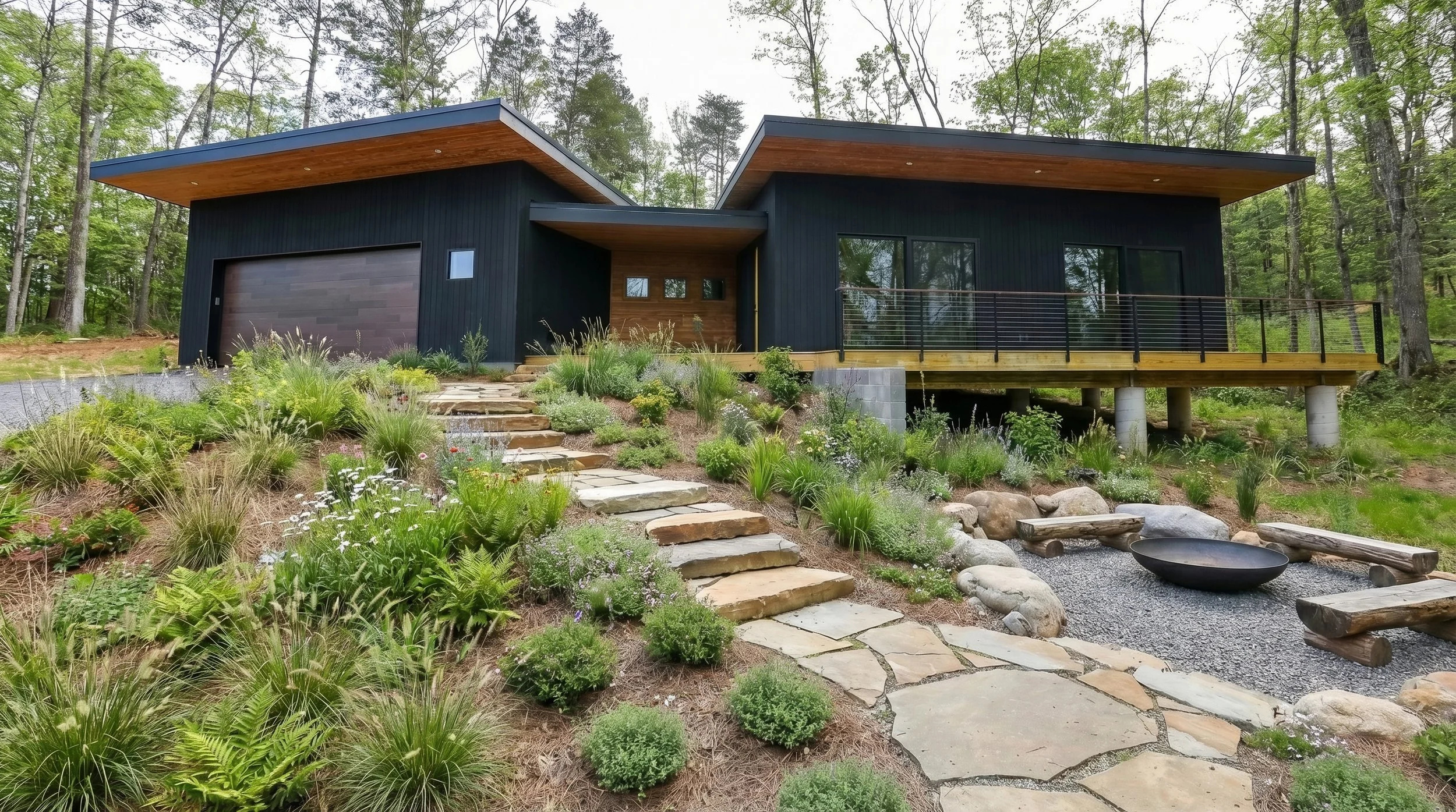
Ravine House with AI generated hardscape and landscaping
The Brief
There's a particular kind of client who makes a design/build firm’s work meaningful — the ones who care as much about how something is built as what it looks like. The young family behind Ravine House in Mocksville, North Carolina, is exactly that kind of client.
They came to ADAMS DesignBuild with a clear set of values, a 15-acre agroforestry farm, a home site on the property with real hydrological constraints, and a vision for a home that belonged on the land rather than imposed on it. What followed was one of the most satisfying design-build projects we've completed.
Designing for the Site
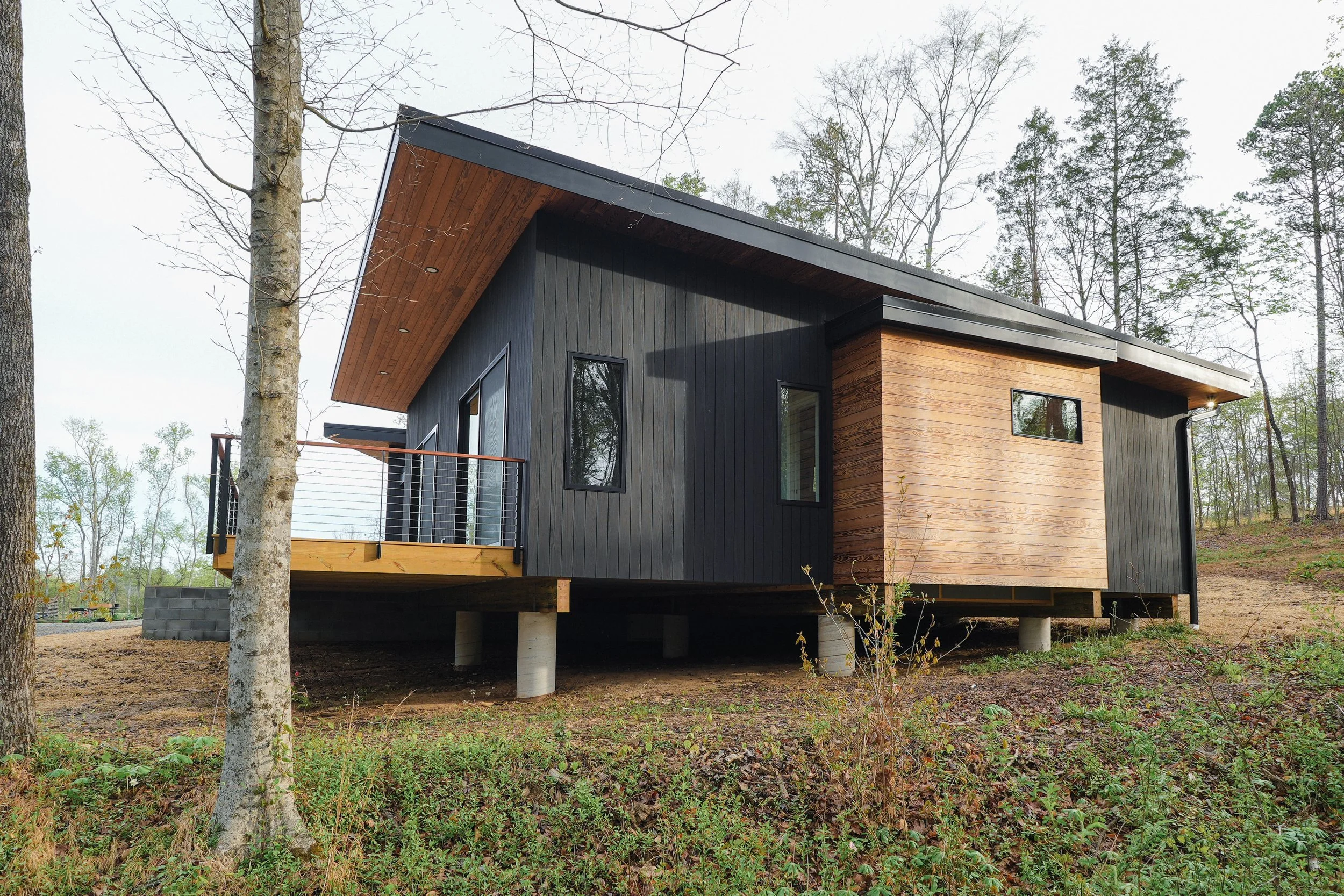
The first challenge was the site itself. The home would sit at the edge of a 100 year flood plane and a ravine that channels stormwater down to Hunting Creek. A conventional crawl space foundation wasn't an option — moisture intrusion and flood risk could undermine the home one day. Instead, we elevated the structure on concrete piers and glulam beams. The home essentially floats above the ground, staying dry regardless of how much water flows through the property.

Ravine House 3D Model
Materials That Mean Something
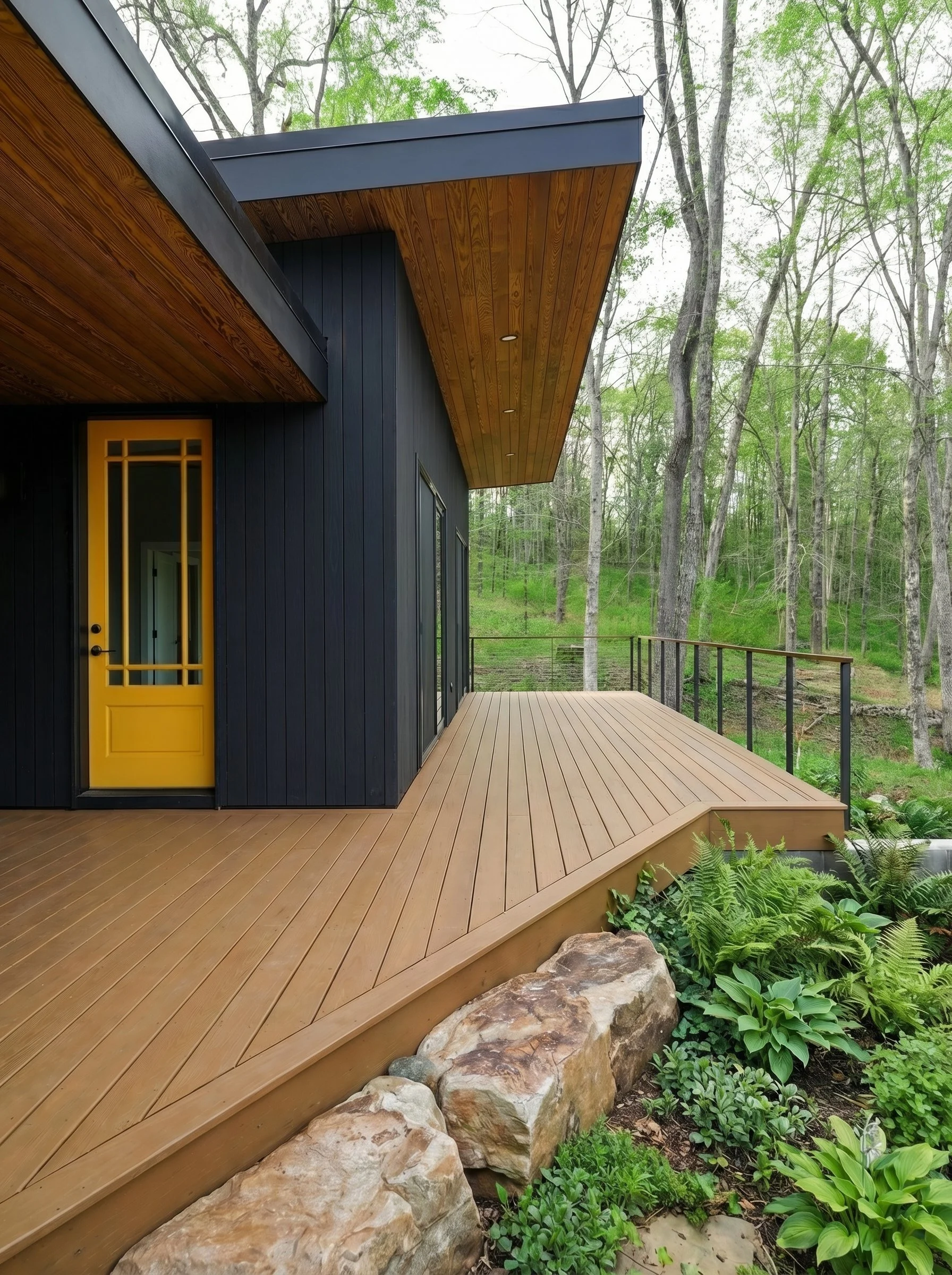
Sustainability wasn't a marketing word on this project — it was a design constraint. The exterior cladding is Arbor Wood Co. pine, treated through a heat and steam process that requires no chemical preservatives. It's durable, FSC-certified, and ages gracefully. Stained in a combination of natural and black tones, it gives the home a quiet, modern character that reads as contemporary without shouting for attention.
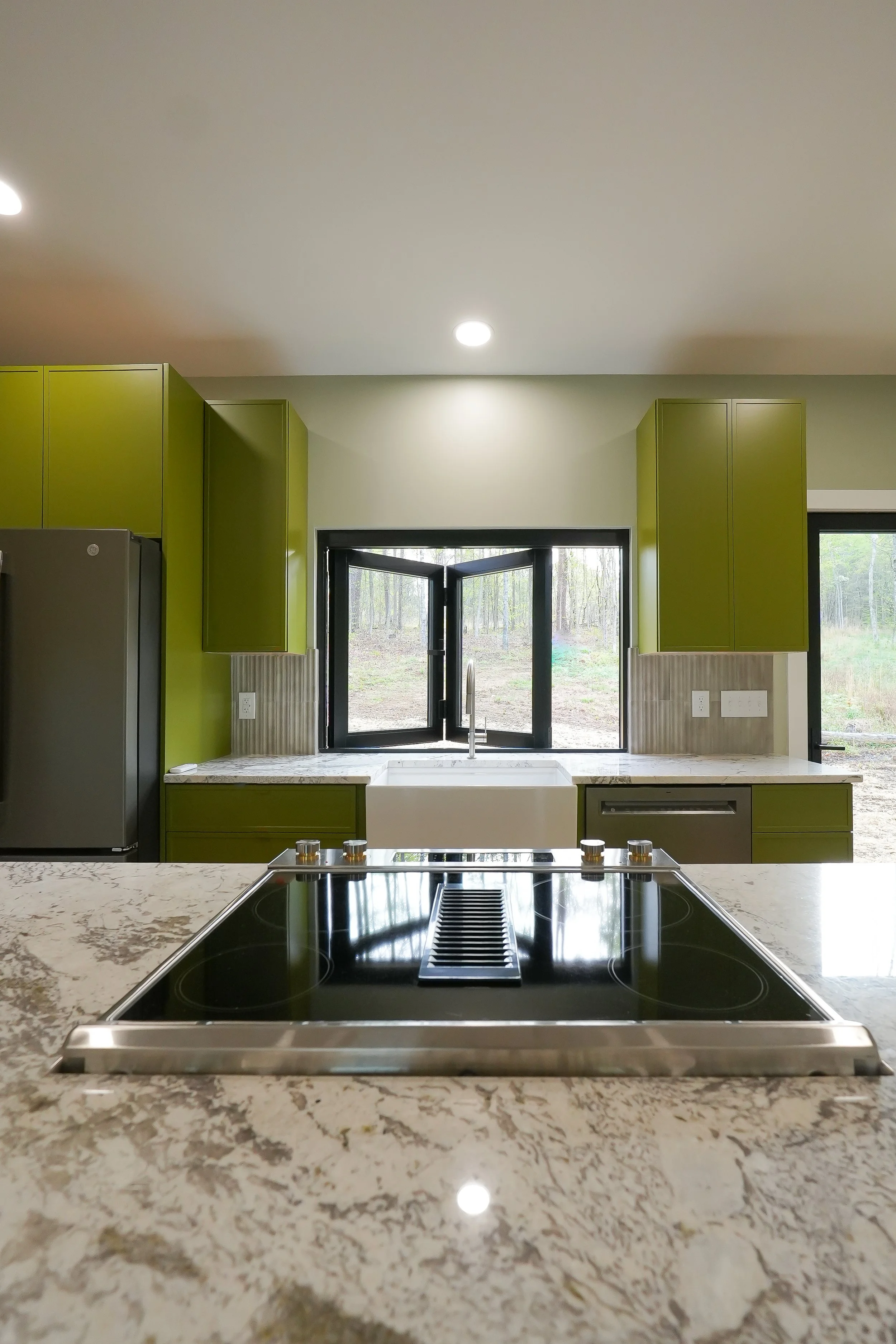
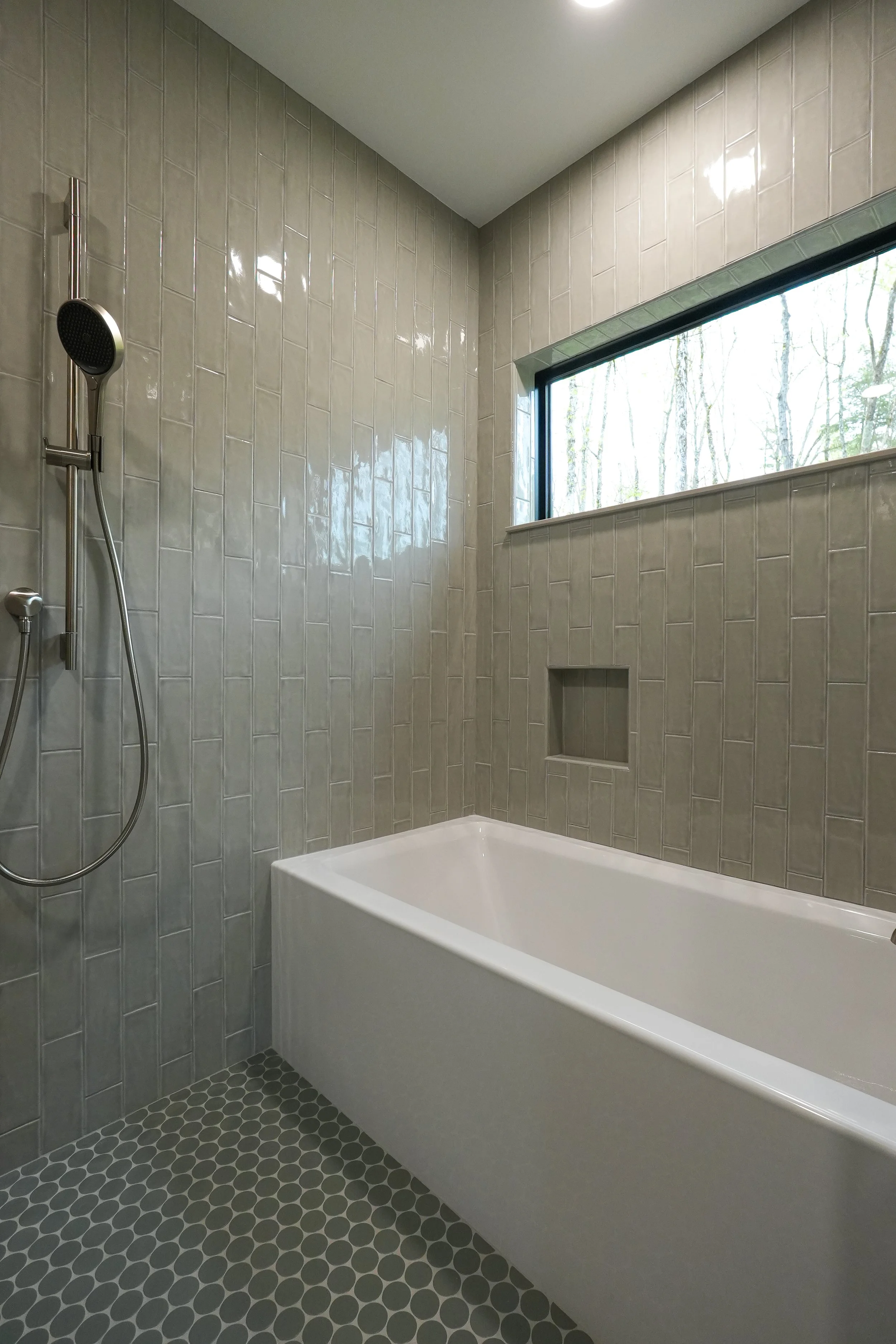
Weather Shield VUE series all-aluminum windows and doors deliver high performance and clean sight lines. The slim frames maximize glass area, connecting the interior to the farmland, creek and forest beyond. Cable Bullet railing on the front deck continues the minimal aesthetic while keeping views unobstructed.
Small Scale, Big Comfort and the Ultimate Compliment
One of the most common misconceptions in residential construction is that a home's quality is proportional to its size. Ravine House pushes back on that idea. With added insulation and air sealing in the whole home envelope, the home stays energy-efficient in both summer heat and winter cold reducing the demand on the HVAC system — a meaningful consideration for a family committed to living lightly on their land. Prior to the finishing stage, the building inspector said “this is probably the best built house I have seen in the last five years.” From someone who sees hundreds of homes a year, it's the kind of comment that validates every conversation about what the home should be and how long it should last.